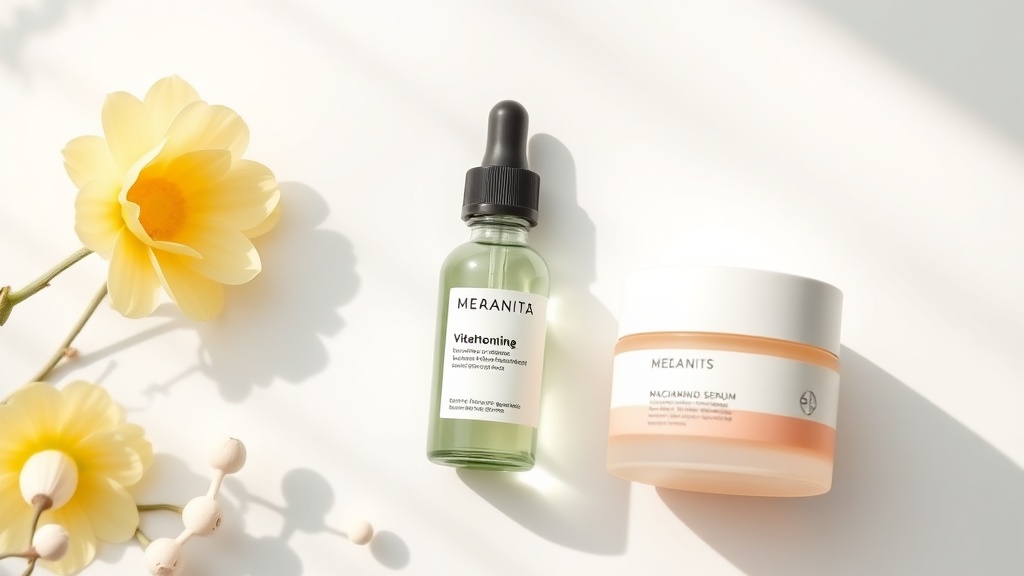
Your AM Skincare Routine: The Right Order (And Why It Actually Matters)

Does the order actually matter?
Yes. And here's why: your morning routine isn't just about slapping products on your face. It's about layering them in an order that lets each one do its job — and not cancel out the others.
Think of it like building a house. You don't put the roof on before the walls. Same logic applies to your face.
The AM Routine Order (And Why It Works)
Your morning routine has one job: protect and defend. Unlike your PM routine (which repairs), your AM routine is about antioxidants, hydration, and SPF. That means the order is:
Step 1: Cleanser (Water-based, pH 5.5 or lower)
Why first: You need a clean base. Your skin has been producing sebum and shedding dead cells all night. A cleanser removes that + any leftover PM products.
What to use: Keep it gentle. Your skin barrier is still waking up.
Product picks:
- Budget ($5-8): CeraVe Foaming Cleanser — removes oil without stripping, has ceramides built in
- Mid ($12-15): Vanicream Gentle Facial Cleanser — fragrance-free, dermatologist-tested
- Splurge ($28-35): La Roche-Posay Toleriane Purifying Foaming Cleanser — removes makeup residue if you didn't remove it last night
Wait time: None. Pat dry immediately and move to step 2 while skin is still slightly damp.
---Step 2: Vitamin C Serum (Low pH, 3.5-5.5)
Why second: Vitamin C is an antioxidant that neutralizes free radicals from sun exposure (yes, even on cloudy days). But it needs a low pH to penetrate effectively. Once it's absorbed, your skin pH naturally rises back to neutral. That's when niacinamide comes in.
The science: L-ascorbic acid (the most effective form) works optimally at pH 3.5-5.5. If you apply it to a higher pH skin, it won't penetrate. If you layer it on top of something buffering the pH (like niacinamide at pH 6-7), you've just wasted your money.
But wait — can you use them together? Yes. Just use vitamin C first, let it absorb (3-5 minutes), and then layer niacinamide. By that time, your skin pH has normalized and both actives can coexist without interfering.
Product picks:
- Budget ($8-12): The Ordinary Vitamin C Suspension 23% + HA Spheres 2% ($11) — 23% L-ascorbic acid, water-free formula (more stable). Texture is gritty; mix with a drop of moisturizer if it bothers you. Real data: users report visible brightening in 4-6 weeks.
- Mid ($18-25): Timeless Vitamin C + E Ferulic Serum ($20) — stabilized with vitamin E and ferulic acid (increases effectiveness by ~4x). Smoother texture than The Ordinary.
- Splurge ($60-80): Skinceuticals C E Ferulic ($160) — yes, it's expensive, but the formulation is legitimately excellent. Is it 8x better than Timeless? No. Is it worth it if budget allows? Yes.
How much: 2-3 drops. Vitamin C is potent. More doesn't mean better results.
Wait time: 3-5 minutes. Let it fully absorb before moving to step 3.
---Step 3: Niacinamide Serum (Optional but recommended, pH 5.5-7)
Why here: Niacinamide (also called vitamin B3) is an underrated ingredient that does multiple things: strengthens your skin barrier, reduces inflammation, minimizes pores, and regulates sebum. It's stable at neutral pH, so it goes AFTER vitamin C has been absorbed.
The science: Niacinamide concentration matters. You need at least 4-5% for visible results. Most products have 4-10%. Below 4%? It's there for marketing, not efficacy.
Product picks:
- Budget ($5-8): The Ordinary Niacinamide 10% + Zinc 1% ($7) — straightforward, effective, no frills. 10% niacinamide is on the higher end (more is not always better for sensitive skin, but this concentration is safe).
- Mid ($15-20): Paula's Choice 10% Niacinamide Booster ($38) — same concentration but in a better base formula. Absorbs faster, less likely to pill.
- Splurge ($45-60): Glossier Super Pure ($42) — niacinamide + zinc + salicylic acid. Not necessary if you're already using other actives, but good if you want a multi-tasker.
How much: 1-2 pumps. A little goes a long way.
Wait time: 1-2 minutes to absorb.
---Step 4: Moisturizer (Hydrating, pH-neutral)
Why here: After vitamin C and niacinamide, your skin needs hydration. A moisturizer seals in the actives and prevents transepidermal water loss (TEWL) — which is fancy for "stops your skin from drying out."
The science: Moisturizers work through three mechanisms:
- Humectants (pull water from the air into skin): hyaluronic acid, glycerin
- Emollients (soften and smooth): oils, butters, squalane
- Occlusives (seal moisture in): ceramides, petrolatum, dimethicone
A good AM moisturizer has all three — but lightweight enough that you can layer SPF on top without pilling.
Product picks:
- Budget ($12-16): CeraVe PM Facial Moisturizing Lotion ($17) — yes, it says PM, but it works great in the AM too. Has ceramides, hyaluronic acid, and niacinamide. Lightweight, absorbs fast.
- Mid ($18-25): Vanicream Facial Moisturizer ($18) — fragrance-free, no essential oils, no dyes. Boring is good in skincare.
- Splurge ($50-70): La Roche-Posay Toleriane Ultra Fluid ($48) — ultra-lightweight, won't pill under sunscreen, has prebiotic thermal water.
How much: Pea-sized amount. Press, don't rub.
Wait time: 1-2 minutes to set.
---Step 5: SPF 30+ (Broad Spectrum, UVA/UVB)
Why last: SPF is your insurance policy. It goes on last because it needs to form a protective layer on top of everything else. If you layer it underneath other products, you're diluting its effectiveness.
The science: SPF measures UVB protection (the burning rays). Broad spectrum means it also protects against UVA (the aging rays). You need at least SPF 30 for daily use. SPF 50 is better, but the difference between 30 and 50 is only about 1-2% more protection (SPF 30 blocks 97%, SPF 50 blocks 98%).
Critical: Use enough. Most people use 25-50% of the recommended amount. You need 1/4 teaspoon for your face. That's more than you think.
Product picks:
- Budget ($8-12): Neutrogena Ultra Sheer Dry-Touch Sunscreen SPF 55 ($8) — doesn't leave a white cast, absorbs quickly. The classic for a reason.
- Mid ($16-20): CeraVe AM Facial Moisturizing Lotion SPF 30 ($17) — moisturizer + SPF in one. Not the strongest SPF, but convenient and effective if you use enough.
- Splurge ($35-45): La Roche-Posay Anthelios Ultra Light Fluid SPF 60 ($40) — mineral + chemical hybrid, doesn't leave a white cast, water-resistant for 80 minutes.
How much: 1/4 teaspoon (about the size of a pea for your whole face). Yes, really.
Wait time: 15 minutes before sun exposure (gives it time to set).
---The Complete AM Routine (Timed)
Total time: 8-10 minutes
| Step | Product | Amount | Wait | Time |
|---|---|---|---|---|
| 1 | Cleanser | Pea-sized | None | 1 min |
| 2 | Vitamin C | 2-3 drops | 3-5 min | 5 min |
| 3 | Niacinamide | 1-2 pumps | 1-2 min | 2 min |
| 4 | Moisturizer | Pea-sized | 1-2 min | 2 min |
| 5 | SPF 30+ | 1/4 tsp | 15 min | 2 min |
The Budget Version ($20-25/month)
Cleanser: CeraVe Foaming ($7) — lasts 2 months
Vitamin C: The Ordinary ($11) — lasts 2-3 months
Niacinamide: The Ordinary ($7) — lasts 3-4 months
Moisturizer: CeraVe PM ($17) — lasts 1.5 months
SPF: Neutrogena Ultra Sheer ($8) — lasts 1 month
Total first month: $50. Months 2+: $15-20.
---Common Mistakes (And How to Fix Them)
Mistake 1: Layering Vitamin C + Niacinamide Immediately
The problem: You read they shouldn't be combined, so you're using them separately. But the research is outdated — one bad study from 1960s made this claim.
The fix: Use them together, but in order: vitamin C first (wait 3-5 min), then niacinamide. Your skin pH naturally rises, and both actives work.
---Mistake 2: Not Waiting Long Enough Between Steps
The problem: You're layering everything at once. Vitamin C needs time to penetrate. If you don't wait, it sits on the surface and oxidizes.
The fix: Wait 3-5 minutes after vitamin C. That's it. Everything else can go faster.
---Mistake 3: Using Too Much SPF (Or Too Little)
The problem: Most people use 1/2 to 1/4 of the recommended amount. That drops SPF 50 down to about SPF 15-20.
The fix: Use 1/4 teaspoon for your whole face. It sounds like a lot. It's not. Your face is smaller than you think.
---Mistake 4: Applying SPF Over Dry Products
The problem: Vitamin C serums and some niacinamide serums can pill under sunscreen if they're not fully set.
The fix: Wait 1-2 minutes after your last serum before applying SPF. Let it fully absorb.
---Mistake 5: Using a Heavy Moisturizer in the AM
The problem: Your PM moisturizer is designed to repair overnight. In the AM, it's too heavy and will pill under SPF.
The fix: Use a lightweight moisturizer in the AM. Save the heavy cream for PM.
---Skin Type Adjustments
Oily Skin
Skip the moisturizer or use a gel-based one (like Neutrogena Hydro Boost Hydrating Tint). Your natural sebum is enough. Focus on vitamin C (brightening) and niacinamide (sebum control).
Dry Skin
Use a richer moisturizer (add a facial oil before SPF if needed). Consider a hydrating essence between your cleanser and vitamin C to add an extra layer of moisture.
Combination Skin
Use this exact routine. It's designed for combo skin (lightweight enough for oily zones, hydrating enough for dry zones).
Sensitive Skin
Start with just cleanser + moisturizer + SPF for 2 weeks. Then add niacinamide (gentler than vitamin C). Add vitamin C last, starting with 2x per week, then increasing.
---Seasonal Adjustments
Summer (Hot, Humid)
Use the lightweight version. Skip the heavy moisturizer or use a gel-based one. Your environment is already humid.
Winter (Cold, Dry)
Add an extra hydrating step. After niacinamide, apply a hydrating essence or toner before your moisturizer. Your skin is losing water faster.
---The Bottom Line
Your AM routine should take 8-10 minutes and cost $15-20/month after the first month. The order matters because each product has a job: cleanse, antioxidize, strengthen, hydrate, protect. Do them out of order and you're wasting money.
The most important step? SPF. That's non-negotiable. Everything else is optimization.
Start with cleanser + moisturizer + SPF if you're new to skincare. Once that's locked in, add vitamin C and niacinamide. You don't need more than this.
Questions about your routine? Drop them in the comments. I read everything.
This post contains affiliate links. If you purchase through these links, I may earn a small commission at no extra cost to you. I only recommend products I've personally tested or thoroughly researched.