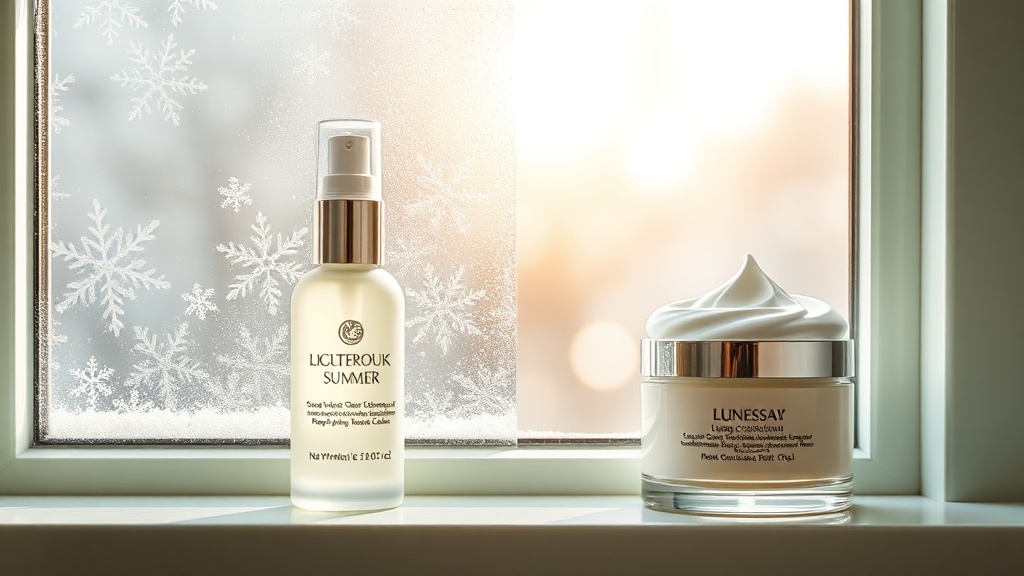
Why Your Winter Skincare Routine Should Be Different From Summer

Every November, my inbox fills with the same question in different variations: "Why did my skin suddenly get worse? I haven't changed anything."
That's exactly the problem. You didn't change anything — but your environment did.
Winter fundamentally alters the conditions your skin operates in. Lower humidity, cold outdoor air, heated indoor air, less UV exposure but more barrier stress. The routine that worked in July isn't optimized for January.
This isn't about overhauling everything. It's about strategic adjustments.
What Winter Does to Your Skin
Low Humidity Strips Moisture
Relative humidity in summer often exceeds 60%. In winter, outdoor air can drop to 20–30%, and indoor heated air can plummet to 10–15%.
Why this matters: humectants in your skincare (hyaluronic acid, glycerin) work by pulling water from the environment into your skin. When there's no water in the air to pull, they can pull water from deeper layers of your skin instead. That's the opposite of what you want.
This doesn't mean you should stop using humectants. It means you need to seal them in with a stronger occlusive layer. In summer, a lightweight moisturizer might be sufficient. In winter, you need a richer cream and possibly an occlusive on top.
Cold Air Damages the Barrier
The lipid matrix of your stratum corneum — the "mortar" between your skin cells — becomes less fluid in cold temperatures. Think of how butter hardens in the fridge. Your barrier lipids do something similar.
This makes the barrier more rigid and more prone to cracking, which allows more water to escape and more irritants to enter. The result: tightness, flaking, redness, and increased sensitivity.
Indoor Heating Is a Double Hit
Central heating creates warm, dry indoor environments. You're getting heat without humidity. This accelerates evaporation from the skin's surface and can worsen the barrier damage caused by cold outdoor air.
You shuttle between cold-dry outside and warm-dry inside all day. Your skin never gets a humidity break.
Less Sebum Production
Sebaceous glands produce less oil in cold temperatures. For oily skin, this can actually be a welcome change. For dry and normal skin types, it means less natural lubrication and a greater need for external moisture.
What to Swap for Winter
Swap 1: Lighter Moisturizer → Richer Cream
Summer: A lightweight gel-cream or lotion with hyaluronic acid and light emollients. Something that absorbs quickly and doesn't feel heavy in the humidity.
Winter: A richer cream with ceramides, fatty acids, cholesterol, and heavier emollients like shea butter or squalane. It should take a moment to absorb — that thickness is doing the barrier repair work.
If your summer moisturizer disappears into your skin instantly, your winter moisturizer should sit on the surface for 30–60 seconds before absorbing. That's not a flaw — it's a feature.
For oily skin types who don't want heavy creams: you don't necessarily need to switch to a thick cream. Adding a few drops of squalane oil to your regular moisturizer can provide the extra occlusion without the heavy feel.
Swap 2: Gel Cleanser → Cream Cleanser
Summer: A gel or foam cleanser that handles excess oil and sweat.
Winter: A cream or milk cleanser that cleans without stripping. Foaming agents are more aggressive on an already-compromised barrier.
If you double cleanse, keep your oil cleanser as step one — oil cleansers are generally gentle regardless of season. But consider switching your second cleanser to something creamier.
Swap 3: Add (or Upgrade) Your Occlusive
Summer: Moisturizer alone may be sufficient if humidity is high enough.
Winter: Add an occlusive layer as the final PM step. Petrolatum, squalane, or a sleeping mask. This prevents the overnight moisture loss that makes you wake up with tight, flaky skin.
The "slug life" trend — applying a layer of Vaseline over your nighttime routine — sounds extreme but the science is solid. Petrolatum reduces transepidermal water loss by up to 98%. In winter, this can be the single most impactful change you make.
Swap 4: Reduce Active Frequency
Summer: Your skin might tolerate retinoids 5–6 nights per week without issue.
Winter: A compromised barrier is more reactive. Consider reducing to 3–4 nights per week, or buffering your retinoid (applying moisturizer before and after the retinoid).
This isn't about ditching your actives. It's about reducing the irritation burden on a barrier that's already under stress. If your retinoid makes your skin red and flaky in winter but not in summer, frequency is the first thing to adjust.
The same applies to chemical exfoliants (AHAs, BHAs). If you use them 2–3 times per week in summer, consider dropping to once per week in winter, or switching to a lower concentration.
What NOT to Change
Don't stop using SPF. UVA rays are present year-round and penetrate through clouds and windows. Snow reflects up to 80% of UV radiation. Winter sun damage is real.
Don't stop using your treatment active entirely. Retinoids, vitamin C, and other actives still work in winter. Reduce frequency if needed, but don't abandon them. Consistency over months is what produces results.
Don't add a bunch of new products simultaneously. The instinct when your skin gets dry is to pile on more products. Resist this. Adjust 1–2 products and give your skin a week to respond before making additional changes.
The Winter Routine Template
AM:
- Gentle cleanse (cream cleanser or water rinse)
- Hydrating serum (if using) — apply to damp skin
- Rich moisturizer
- SPF (still non-negotiable)
PM:
- Oil cleanser (if double cleansing)
- Cream cleanser
- Active treatment (reduced frequency if needed)
- Rich moisturizer
- Occlusive seal (petrolatum, squalane, or sleeping mask)
Environmental Adjustments
Use a humidifier. This is probably the highest-impact non-skincare change you can make. A humidifier in your bedroom keeps ambient humidity at 40–50%, giving your humectants something to work with and reducing overnight moisture loss.
Lower your shower temperature. Hot showers feel amazing in winter but strip the skin's natural oils. Lukewarm is better for your barrier.
Wear gloves. Hand skin is thin and has fewer sebaceous glands. It's often the first place to show winter damage. A rich hand cream after washing and gloves outdoors make a significant difference.
The Bottom Line
Winter skincare isn't about a totally different routine. It's about adjusting intensity and richness to match the environment.
Richer moisturizer, gentler cleanser, added occlusion, reduced active frequency. Four adjustments that take your summer routine and make it winter-appropriate.
Your skin is responding to its environment. Help it out.
Medical disclaimer: I'm not a dermatologist. The information here is educational and not medical advice.
— Priya Chakraborty
Former pharmaceutical researcher explaining skincare science in plain English.