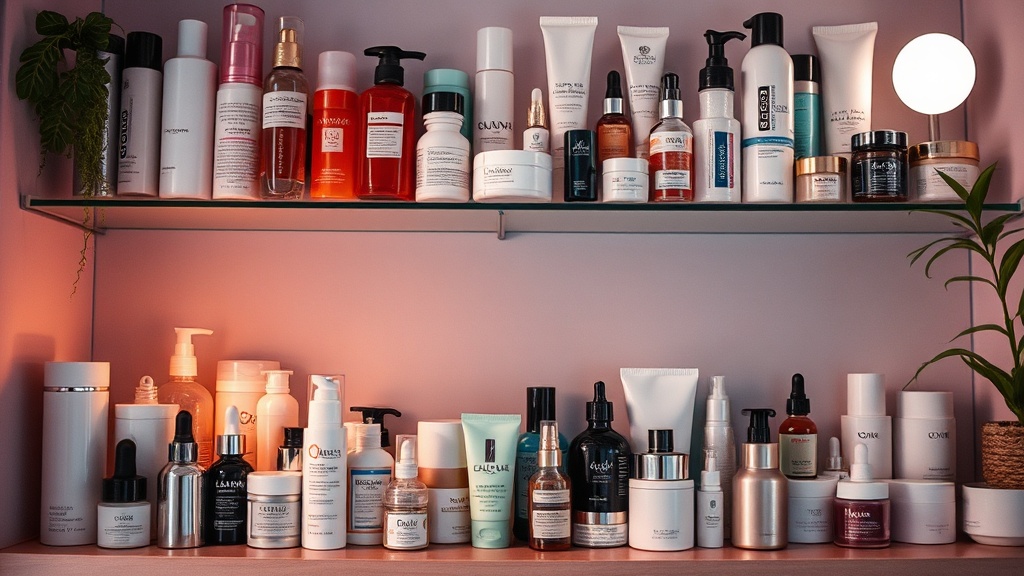
Why Your Skincare Shelfie Looks Cluttered and How to Fix It

The Cost of Over-Complexity
The average consumer currently uses approximately 10 to 12 skincare products per week, yet clinical studies suggest that using more than five active ingredients simultaneously can actually destabilize the skin barrier and lead to contact dermatitis. A cluttered skincare shelf is rarely a sign of a high-performance routine; more often, it is a collection of redundant formulations and conflicting actives that work against your biological goals. This guide provides a scientific framework to audit your current collection, identify ingredient conflicts, and streamline your regimen into a high-efficacy system.
When your shelf is overflowing, you aren't just wasting money—you are likely inducing "skincare fatigue" in your stratum corneum. This occurs when the skin is bombarded with too many different pH levels and molecular weights, preventing any single ingredient from working optimally. To fix a cluttered routine, you must transition from a consumer mindset of "more is better" to a researcher's mindset of "efficacy through stability."
Step 1: The Scientific Audit
Before you discard anything, you need to categorize your products by their primary biological function. A functional skincare routine should be built on a foundation of support, followed by targeted treatment. Grab a notebook and group your products into these four specific categories:
- Cleansers and Preparatory Steps: This includes oil cleansers, micellar waters, and pH-balanced gel cleansers.
- Hydrators and Humectants: Products designed to draw moisture into the skin, such as hyaluronic acid serums, glycerin-based essences, or thermal waters.
- Active Treatments: The "heavy hitters" like Retinoids, Vitamin C (L-Ascorbic Acid), Benzoyl Peroxide, or Alpha Hydroxy Acids (AHAs).
- Occlusives and Barriers: Moisturizers and oils designed to seal in moisture and prevent transepidermal water loss (TEWL).
Once categorized, look for redundancies. If you own a hydrating toner, a hyaluronic acid serum, and a facial mist, you likely have three products performing the same basic function of increasing hydration. While they may have different textures, from a chemical standpoint, you can often consolidate these into one high-quality essence or a single serum to reduce the number of steps in your routine.
Step 2: Identifying Ingredient Conflicts
The most common reason for a "cluttered" feeling is the presence of products that should not be used together. Using incompatible actives can cause irritation or even neutralize the effectiveness of the ingredients. For example, if you are applying a highly acidic Vitamin C serum followed immediately by a strong Glycolic Acid toner, you are creating an environment of extreme low pH that can compromise your skin's acid mantle.
Review your labels for these common incompatible pairings:
- Retinoids and Vitamin C: While you can use them in the same 24-hour cycle (Vitamin C in the morning and Retinol at night), using them simultaneously in one session can cause significant irritation and reduces the stability of the L-Ascorbic Acid.
- Benzoyl Peroxide and Retinoids: Benzoyl Peroxide can oxidize certain retinoids, rendering the treatment ineffective. If you are treating acne, choose one or the other for a specific time of day.
- AHAs/BHAs and Retinoids: Over-exfoliating with chemical peels or high-percentage acids while using a prescription-strength retinoid like Tretinoin is a recipe for a damaged skin barrier.
If your shelf is full of these conflicting products, you don't need to throw them all away; you simply need to implement a "skin cycling" method. This involves alternating your active nights to ensure your skin has recovery periods. For a more detailed look at how to structure your daily steps, refer to the ultimate morning skincare routine for glowing skin to ensure your daytime actives are optimized.
Step 3: The "One Active per Routine" Rule
To declutter effectively, adopt the rule of one primary active per application. A high-performance routine does not require a dozen different serums. Instead, it requires a few highly stable, well-formulated products. If you want to improve skin texture, use a dedicated chemical exfoliant twice a week. If you want to target aging, use your retinoid on the alternating nights.
Example of a Streamlined Routine:
Morning:
1. Gentle pH-balanced Cleanser (e.g., La Roche-Posay Toleriane Hydrating Cleanser)
2. Vitamin C Serum (e.g., SkinCeuticals CE Ferulic or a stable derivative)
3. Lightweight Moisturizer (e.g., Neutrogena Hydro Boost)
4. SPF 50+ (Non-negotiable)
Evening:
1. Double Cleanse (Oil-based cleanser followed by water-based cleanser)
2. Targeted Treatment (e.g., The Ordinary Retinol 0.5% in Squalane)
3. Barrier Repair Cream (e.g., CeraVe Moisturizing Cream)
By following this structure, you eliminate the "middle-man" products—the unnecessary essences or secondary serums that don't add a unique biological benefit. This reduces the chance of product pilling and ensures your skin isn't overwhelmed.
Step 4: Managing Product Longevity and Storage
A cluttered shelf often contains expired or degraded products. Many active ingredients, particularly antioxidants like Vitamin C and certain peptides, are highly sensitive to light, heat, and oxygen. If you have a collection of half-empty bottles that have turned brown or changed scent, they are no longer beneficial and may actually be harmful to your skin.
To maintain the integrity of your streamlined collection, follow these storage protocols:
- Avoid the Bathroom Humidity: The constant fluctuation in temperature and humidity from your shower can degrade the stability of your serums. If possible, store your most sensitive actives (like Vitamin C or Retinol) in a cool, dark drawer.
- Use a Skincare Fridge Wisely: While many enthusiasts use a skincare fridge for aesthetic reasons, it can be scientifically beneficial for certain products. Cooling can help soothe inflammation and may extend the shelf life of certain botanical extracts or soothing masks. For a deep dive into how to use this tool effectively, read our guide on building a high-performance skincare fridge routine.
- Check the PAO Symbol: Look for the "Period After Opening" symbol on your packaging—it looks like a small open jar with a number (e.g., 6M, 12M). Once that time passes, the chemical stability of the product is no longer guaranteed.
Step 5: The Seasonal Pivot
A major cause of clutter is the refusal to adapt to seasonal changes. The skincare needs of your skin in a dry, freezing January are fundamentally different from those in a humid, high-UV July. If you are still using a heavy, occlusive facial oil in the middle of summer, you are likely causing congestion and unnecessary buildup.
To keep your shelf lean, implement a seasonal transition strategy. Every three months, perform a "seasonal purge." During the transition from winter to spring, move away from heavy balms and toward lightweight, water-based humectants. As you move from summer to autumn, introduce more substantial barrier-repairing lipids to prepare for the drop in ambient humidity.
"The goal of a skincare routine should not be to use every product you own, but to use the specific molecules your skin requires at this exact biological moment."
Final Checklist for a Minimalist, High-Efficacy Shelf
Before you go back to your vanity, run your current collection through this final checklist. If a product does not pass these points, it is time to let it go:
- Does it have a unique function? If it does exactly what your current serum does, it is redundant.
- Is the ingredient list stable? If the product is an unstable antioxidant that has already begun to oxidize, discard it.
- Does it conflict with my primary active? Ensure your "hero" ingredients aren't fighting each other.
- Is it appropriate for my current season? Ensure the texture and weight of the product match your current environment.
A streamlined shelf is a sign of a sophisticated routine. By focusing on high-quality, compatible, and seasonally appropriate products, you move away from the chaos of consumerism and toward the precision of dermatological science. Your skin—and your budget—will thank you.