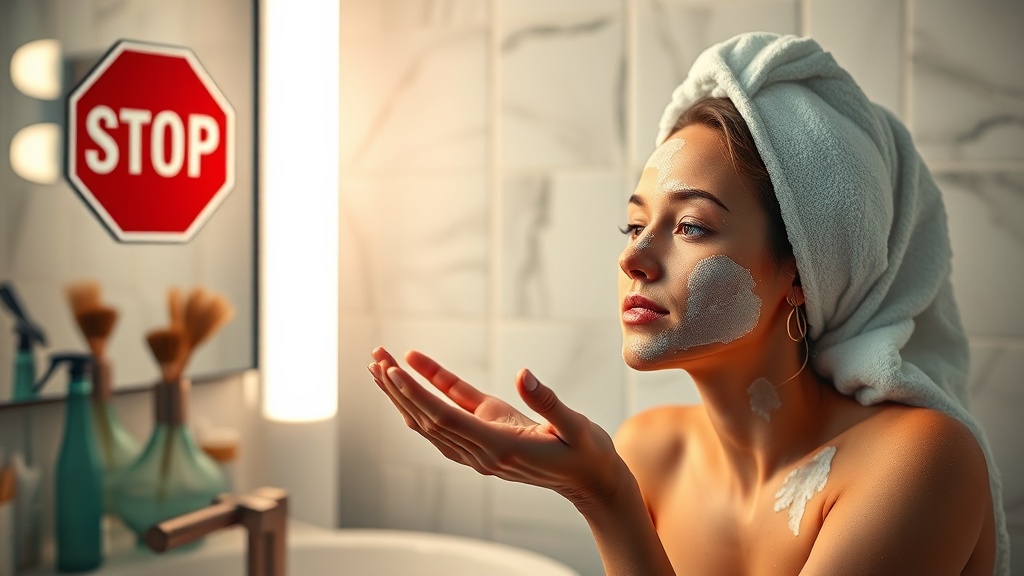
Stop Applying Your Moisturizer to Dry Skin

Quick Tip
Always apply your moisturizer while your skin is still slightly damp to trap moisture effectively.
You’ve just finished washing your face, patted it with a towel, and are about to reach for your heavy cream. Stop right there. If you apply your moisturizer to bone-dry skin, you're missing the most effective way to lock in hydration. This technique—applying products to damp skin—changes how your barrier functions and how much your skin actually absorbs.
Why should I apply moisturizer to damp skin?
Applying moisturizer to damp skin creates a seal that traps water on the surface of your skin before it can evaporate. Most high-quality moisturizers are designed to be humectants or occlusives, meaning they work by pulling moisture into the skin or preventing it from leaving. If your skin is already dry, you're just sitting a layer of cream on top of a dry surface.
Think of it like a sponge. A dry sponge is stiff and hard to work with; a damp sponge absorbs liquid instantly. By applying your cream while your skin is still slightly wet, you're helping those ingredients actually penetrate the stratum corneum (the outermost layer of the epidermis). This is a fundamental principle of skin barrier function.
"Hydration isn't just about what you put on your face; it's about how you prep the surface first."
What is the best order for my skincare products?
The most effective way to layer is to go from thinnest consistency to thickest. If you've already mastered the right order for your products, you'll find that dampness is the secret ingredient in the middle of that sequence.
- Cleanser: Use a gentle, non-stripping cleanser like the CeraVe Hydrating Facial Cleanser.
- Mist/Toner: Apply a hydrating essence or a simple thermal water spray.
- Serum: Apply your active serums (like a Hyaluronic Acid) while the skin is still wet from the mist.
- Moisturizer: Seal everything in with a cream or oil.
The catch is that you don't want your skin to be dripping—that's messy and can lead to product pilling. You want it dewy. If you use a product like La Roche-Posay Cicaplast Baume B5, the dampness helps the panthenol and shea butter spread more evenly across your face.
Does it matter if I use a serum first?
Yes, because the sequence dictates how much of the active ingredient actually reaches your target cells. If you apply a heavy oil or a thick cream first, your water-based serum won't be able to penetrate that lipid barrier. It's a simple matter of physics.
Here is a quick comparison of how different skin states react to moisturizer:
| Skin State | Result of Applying Moisturizer | Efficiency |
|---|---|---|
| Bone Dry | Sits on top; feels heavy/greasy | Low |
| Damp/Dewy | Absorbs deeply; locks in water | High |
| Sopping Wet | Product slides off; pilling occurs | Medium |
Worth noting: if you use prescription-strength retinoids, always check your specific product instructions. While many dermatologists suggest applying retinoids to dry skin to reduce irritation, your hydrating layers underneath should still be applied to damp skin to ensure your barrier stays intact.