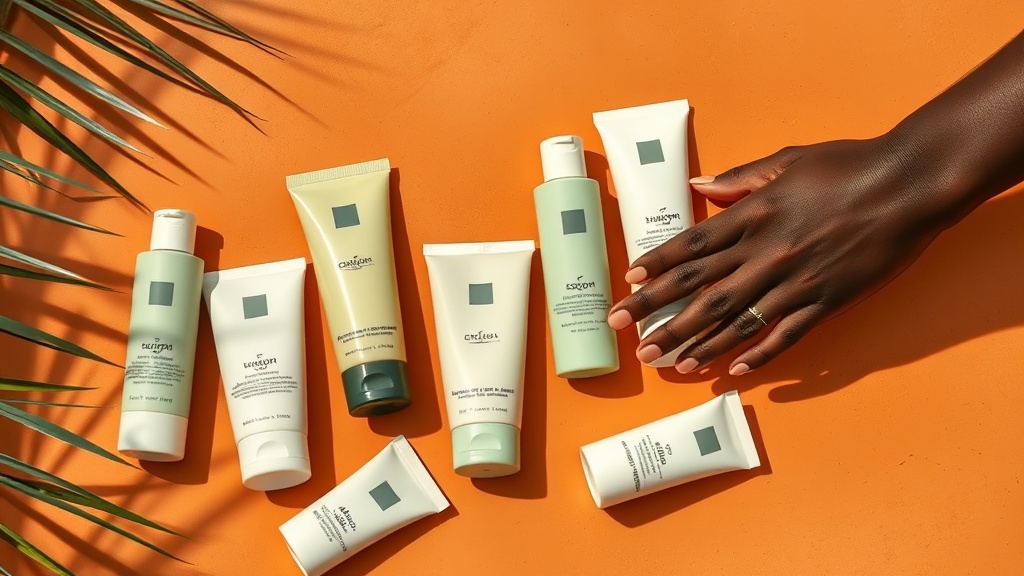
SPF for Dark Skin: The Best Sunscreens With No White Cast

Let me start with something that frustrates me: the idea that dark skin "doesn't need sunscreen" because melanin provides natural protection.
Melanin does offer some UV defense — roughly equivalent to SPF 13 in the darkest skin tones. That's not nothing. But SPF 13 isn't SPF 30, and it doesn't protect against the full UV spectrum. UV damage in dark skin shows up differently — less sunburn, more hyperpigmentation, uneven skin tone, and accelerated collagen breakdown.
The real problem isn't whether people with dark skin need sunscreen. The real problem is that most sunscreens were not formulated with dark skin in mind.
White cast — that ashy, grayish film that mineral sunscreens leave on melanin-rich skin — is the number one barrier to sunscreen compliance in darker skin tones. And it's a formulation problem, not a user problem.
Let's fix that.
Why Dark Skin Still Needs SPF
UV Damage Is Invisible Until It Isn't
UV radiation causes DNA damage at the cellular level regardless of melanin content. In dark skin, this damage manifests as:
- Post-inflammatory hyperpigmentation (PIH): dark spots that linger for months after any inflammation, acne, or irritation
- Melasma: hormone-driven hyperpigmentation worsened by UV exposure
- Photoaging: collagen breakdown, fine lines, loss of elasticity — happens in all skin tones
- Skin cancer: rarer in dark skin, but often diagnosed later and at more advanced stages
A 2016 study in the Journal of the American Academy of Dermatology found that melanin-rich skin is particularly vulnerable to visible light and UVA1 — wavelengths that many sunscreens don't adequately cover.
Evidence level: Strong. UV damage in dark skin is well-documented.
The Hyperpigmentation Connection
Here's what many people miss: sun exposure doesn't just cause new dark spots. It makes existing hyperpigmentation worse and prevents fading. If you're using vitamin C, niacinamide, retinoids, or any brightening ingredient without SPF, you're working against yourself.
SPF is the single most effective anti-hyperpigmentation product in your routine. Everything else is secondary.
Chemical vs. Mineral: Why It Matters for Dark Skin
Mineral Sunscreens (Zinc Oxide, Titanium Dioxide)
These sit on top of the skin and physically deflect UV rays. They're gentle, reef-safe, and work immediately upon application.
The problem: they're white pigments. On dark skin, they leave a visible white, gray, or purple cast. Some brands use micronized or nano particles to reduce this, but most mineral sunscreens still show on Fitzpatrick V–VI skin.
Chemical Sunscreens (Avobenzone, Homosalate, Octisalate, etc.)
These absorb UV rays and convert them to heat. They're transparent, lightweight, and invisible on all skin tones.
The tradeoff: some chemical filters can irritate sensitive skin, and there are ongoing studies about systemic absorption (current evidence suggests the levels are not clinically concerning, but research continues).
Hybrid Sunscreens
Combine both types. Often the best option — you get some mineral protection with chemical filters handling the rest, resulting in a thinner, more transparent formula.
My recommendation for dark skin: chemical or hybrid formulas. Mineral-only sunscreens can work if the formula is tinted or uses very finely milled particles, but chemical sunscreens are generally the path of least resistance to no white cast.
Application Tips for Melanin-Rich Skin
Use the right amount. The standard is 1/4 teaspoon for the face — about two finger-lengths. Most people under-apply by 50%.
Reapply every 2 hours in direct sun, or after sweating/swimming. This is where dark-skinned people often fall off — reapplication over makeup is annoying. Sunscreen sprays or sticks make this easier.
Look for "invisible finish" or "no white cast" on the label. Brands are finally marketing specifically to this need.
Tinted sunscreens with iron oxides offer an additional benefit: they block visible light and blue light, which contribute to hyperpigmentation in dark skin. This is a genuine advantage, not just cosmetic.
Product Recommendations (28-Day Tested)
Budget
Black Girl Sunscreen SPF 30 — ~$16
A chemical sunscreen specifically formulated for melanin-rich skin. Truly invisible finish, moisturizing texture, no white cast whatsoever. Contains jojoba, cacao, avocado, and carrot juice extracts. Feels like a lightweight moisturizer. SPF 30 is adequate for daily use, though I'd prefer 50 for extended outdoor time.
Neutrogena Hydro Boost Water Gel Lotion SPF 50 — ~$17
Lightweight, hydrating, completely transparent. The hyaluronic acid base makes it feel more like a serum than a sunscreen. No white cast, no greasy residue. Excellent for oily or combination skin. Available at every drugstore.
Mid-Range
Supergoop Unseen Sunscreen SPF 40 — ~$38
This is the one I recommend most often. Completely clear, feels like a primer, works under makeup, no white cast on any skin tone. Oil-free, fragrance-free. The texture is unlike any other sunscreen — silky, invisible, almost like a skincare product. SPF 40 with broad-spectrum protection.
La Roche-Posay Anthelios Melt-In Milk SPF 60 — ~$36
High SPF, lightweight, dries down matte. Minimal white cast — on medium-dark skin it disappears completely, on the deepest skin tones there may be a very slight sheen that fades within 2–3 minutes. Excellent UVA protection (the Mexoryl filter system). Water-resistant for 80 minutes.
Splurge
Isntree Hyaluronic Acid Watery Sun Gel SPF 50+ PA++++ — ~$22
A Korean sunscreen that's become a cult favorite for dark skin. Completely watery texture, zero white cast, layers beautifully under makeup. The PA++++ rating indicates very high UVA protection. Honestly, at $22 this barely qualifies as "splurge" — it's just harder to find in US stores.
Shiseido Clear Sunscreen Stick SPF 50+ — ~$30
A solid stick format that's perfect for reapplication over makeup. Completely transparent, glides on without disturbing what's underneath. Convenient for on-the-go reapplication — the number one reason people skip reapplying. Water-resistant, TSA-friendly size.
What About Vitamin D?
Yes, SPF can reduce vitamin D synthesis. But vitamin D deficiency in dark-skinned people is more related to reduced synthesis from melanin itself and geographic latitude than to sunscreen use.
Most dermatologists recommend: wear your SPF, take a vitamin D supplement if your levels are low (a blood test can tell you). Don't use vitamin D concerns as a reason to skip sun protection.
Evidence level: Strong. Supplementation is more reliable than UV exposure for maintaining vitamin D levels.
The Bottom Line
Melanin is not a substitute for sunscreen. Dark skin needs UV protection — the consequences just look different (hyperpigmentation instead of sunburn).
The barrier to consistent SPF use in dark skin has always been formulation, not science. White cast is a real problem, and brands that ignore it are failing a significant portion of their potential customers.
The products above prove that invisible, elegant sunscreens for dark skin exist. Use them.
Medical disclaimer: I'm not a dermatologist. The information here is educational and not medical advice.
— Priya Chakraborty
Former pharmaceutical researcher explaining skincare science in plain English.