How to Double Cleanse: A Step-by-Step Guide That Actually Works

How to Double Cleanse: A Step-by-Step Guide That Actually Works
That tight, squeaky feeling after washing your face? It's not clean—it's compromised. Your cleanser just stripped your barrier along with the dirt, and your skin is now working overtime to repair itself. Meanwhile, the sunscreen and sebum you were trying to remove? Probably still sitting in your pores.
This is why I double cleanse. Not because it's trendy, but because the science actually holds up. When you understand how surfactants and lipids interact, the two-step method stops being K-beauty folklore and becomes basic chemistry.
What Is Double Cleansing?
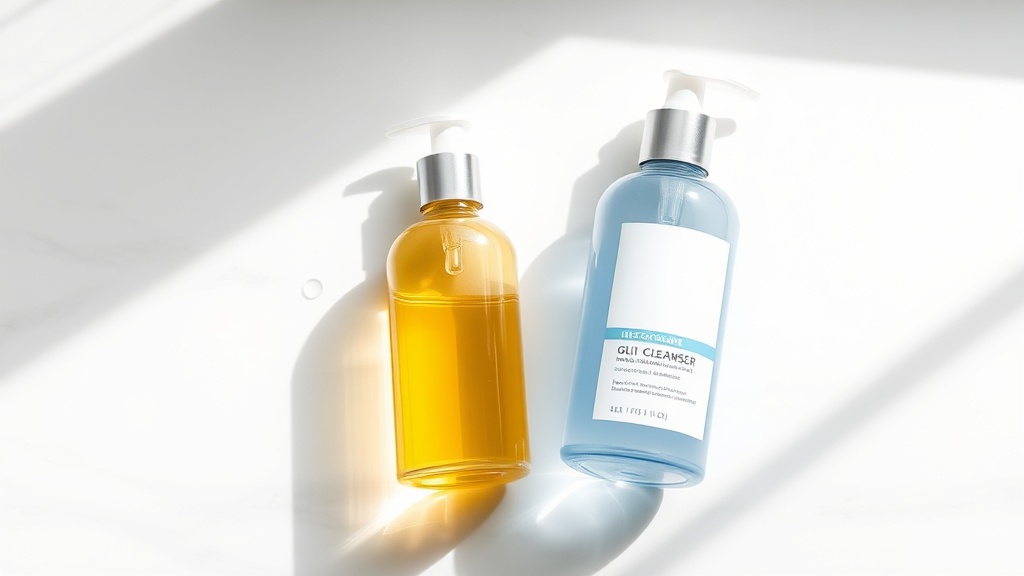
Double cleansing uses two different cleanser types in sequence:
- Oil-based cleanser first — removes oil-soluble impurities (sunscreen, makeup, sebum, pollution)
- Water-based cleanser second — removes water-soluble residue (sweat, dirt, leftover cleanser)
The principle is simple: like dissolves like. Oil cleansers contain lipophilic ingredients that bind to oil-based debris on your skin. Water-based cleansers use surfactants that attract water molecules on one end and oil on the other, lifting away what the first step missed.
Research on skin barrier function consistently shows that harsh cleansing—especially with high-pH surfactants—increases transepidermal water loss (TEWL) and disrupts the lipid matrix that keeps your skin protected (PMC, 2024). Double cleansing, when done correctly, lets you use gentler products overall because each step does a specific job instead of asking one cleanser to brute-force everything off your face.
Who Should Double Cleanse?
Definitely try it if you:
- Wear sunscreen daily (which should be everyone)
- Use long-wear or waterproof makeup
- Have oily or combination skin with visible sebaceous filaments
- Live in a polluted urban environment
- Feel like your skincare "isn't absorbing" or sits on top of your skin
You can probably skip it if you:
- Don't wear sunscreen or makeup (though you should reconsider the sunscreen part)
- Have extremely dry, sensitive skin that's easily irritated
- Already use a gentle, effective single cleanser that removes everything
- Are in a rush and would rather do one thorough cleanse than two half-hearted ones
What You'll Need
Step 1: Oil Cleanser
- Cleansing oil, cleansing balm, or micellar oil
- Look for: Sorbeth-30 Tetraoleate (a mild surfactant that emulsifies with water), jojoba oil, squalane, or caprylic/capric triglycerides
- Avoid if sensitive: Heavy fragrance, essential oils in high concentrations
Step 2: Water-Based Cleanser
- Gel, foam, or cream cleanser depending on your skin type
- Look for: pH between 4.5-6.5, mild surfactants like cocamidopropyl betaine or sodium cocoyl isethionate
- Avoid: Sodium lauryl sulfate (SLS), high-pH soaps that "squeak"
The Method: How to Double Cleanse Properly
Step 1: Oil Cleanse on Dry Skin
Apply your oil cleanser to dry hands and a dry face. This is non-negotiable—water will cause the oil to emulsify prematurely, reducing its ability to dissolve oil-based debris.
Massage for 60 seconds. Work it into your hairline, along your jaw, and over your eyelids if you wear eye makeup. You're not just coating your face; you're giving the oil time to penetrate and break down sunscreen filters and long-wear pigments.
What you should feel: The oil should glide smoothly. If it's dragging or pulling, you need a different formula.
Step 2: Emulsify with Water
Wet your hands with lukewarm water and continue massaging. The oil should turn milky—that's the emulsification happening. The surfactants in the oil cleanser are binding with water, allowing the whole mixture to rinse away instead of leaving a greasy film.
Rinse thoroughly. If your oil cleanser is quality, it should rinse clean without needing a washcloth.
Step 3: Water-Based Cleanse
Apply your second cleanser immediately. You don't need to wait for your face to dry—in fact, damp skin helps most water-based cleansers spread more easily.
Lather for 30 seconds. Focus on areas where you get congested (nose, chin, forehead), but don't scrub aggressively. Let the surfactants do the work.
The 30-second rule matters. Studies on surfactant contact time show that most cleansing agents need at least 20-30 seconds of contact to effectively lift debris without requiring harsh scrubbing (Southampton ePrints, 2008).
Step 4: Rinse and Pat Dry
Rinse with lukewarm water—not hot, not cold. Hot water increases TEWL and can trigger inflammation. Cold water doesn't "close pores" (that's not how pores work) and can be shockingly irritating to sensitive skin.
Pat dry with a clean towel. Don't rub. Your barrier is clean but temporarily more permeable right now; treat it gently.
Pro Tips I Learned the Hard Way
Don't over-massage the oil. I used to do the 3-minute facial massage with my oil cleanser because it felt luxurious. Then I started getting broken capillaries around my nose. Sixty seconds is enough—save the facial massage for a dedicated step with a proper oil or balm.
Your oil cleanser quality matters more than your second cleanser. A well-formulated oil cleanser that emulsifies completely reduces the workload for step two. If you're using a cheap oil that leaves residue, your water-based cleanser has to work harder, which can lead to over-cleansing.
Sorbeth-30 Tetraoleate is the workhorse ingredient. After chemists analyzed dozens of oil cleansers, they found that DHC, HaruHaru, Ma:nyo, Prequel, Anua, and Beauty of Joseon all use this same mild surfactant. It emulsifies effectively without the irritation potential of harsher surfactants. If you see this on an ingredient label, you're likely getting solid formulation.
Double cleansing at night only. Your morning face doesn't have sunscreen or makeup to remove. A single gentle cleanse—or even just water if your skin is very dry—is sufficient.
Common Mistakes (And How to Fix Them)
Mistake 1: Using coconut oil as your oil cleanser
Coconut oil is comedogenic for many people and doesn't emulsify with water. You'll leave a greasy film that your second cleanser struggles to remove. Fix: Use a formulated cleansing oil or balm with proper emulsifiers.
Mistake 2: Choosing a harsh second cleanser
If your gel cleanser leaves you tight and squeaky, it's too aggressive. The combination of two cleansing steps means each one should be gentler than a single "deep clean" product. Fix: Switch to a pH-balanced, syndet-based cleanser.
Mistake 3: Double cleansing when you don't need to
If you're not wearing sunscreen or makeup, you're just stripping your barrier twice for no benefit. Fix: Reserve this method for days with heavier product load.
Mistake 4: Skipping the emulsification step
Rinsing oil cleanser without wetting your hands first leaves oily residue. Fix: Always add water and massage until milky before rinsing.
Mistake 5: Using hot water to "melt" everything off
Hot water damages your barrier and triggers excess oil production as your skin tries to compensate. Fix: Lukewarm water for every step.
Building Your Double Cleansing Routine
For oily/acne-prone skin:
- Step 1: Lightweight oil cleanser (jojoba-based works well—it's structurally similar to sebum)
- Step 2: Gentle gel cleanser with salicylic acid if you're acne-prone, or a plain pH-balanced gel if you're sensitized
For dry/sensitive skin:
- Step 1: Rich cleansing balm that rinses completely clean
- Step 2: Cream or milk cleanser—skip the foaming agents entirely
For combination skin:
- Step 1: Balanced oil cleanser (squalane or caprylic/capric triglyceride base)
- Step 2: Low-foam gel or cream-to-foam hybrid
The Verdict
Double cleansing isn't a gimmick—it's sound chemistry applied to skincare. The "like dissolves like" principle means oil cleansers remove oil-based debris more efficiently than water-based alternatives, while a gentle second cleanse ensures nothing irritating remains on your skin.
That said, it's not mandatory for everyone. If you wear sunscreen daily (and you should), it will improve your skin's clarity over time. If you're bare-faced most days, you're probably fine with one quality cleanser.
The key is intentionality: understanding what each step accomplishes so you can adjust based on what your skin actually needs that day. That's the difference between a routine and a ritual.
What's your cleansing routine? Have you tried double cleansing, or are you skeptical? Drop your experience in the comments—I'm always curious what actually works for real people versus what the internet claims we should be doing.