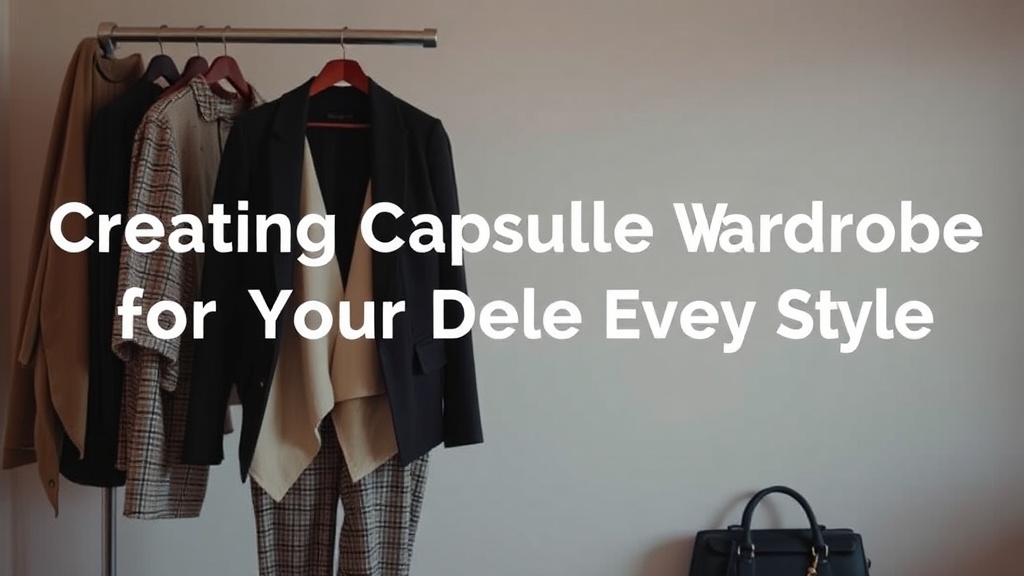
Creating a Capsule Wardrobe for Your Everyday Style

You'll learn how to build a functional capsule wardrobe by identifying your personal style, selecting high-quality foundational pieces, and organizing your closet for maximum efficiency. This process reduces decision fatigue and ensures every item you own actually works together. It's about quality over quantity—a principle I apply to both skincare formulations and the clothes we wear.
What is a Capsule Wardrobe?
A capsule wardrobe is a curated collection of versatile clothing items that can be mixed and matched to create numerous outfits. Instead of a closet full of "nothing to wear" despite a mountain of clothes, you focus on pieces that serve a specific purpose. Think of it as a highly efficient system. It's much like having a simplified, effective skincare regimen—you don't need twenty different serums if you have three that actually work for your skin's needs.
The goal isn't to restrict your creativity. It's to provide a reliable foundation. When you own pieces that actually fit and function, you stop buying "micro-trends" that fall apart after two washes. You might even find that your wardrobe-building process mirrors the way you build a skincare routine—focusing on the fundamentals before adding the "extra" stuff.
The core components usually include:
- Neutrals: Black, white, navy, beige, or grey.
- Texture: Silk, denim, wool, or linen to add depth.
- Signature Pieces: One or two items that feel uniquely "you."
How Do I Start Building a Capsule Wardrobe?
Start by auditing your current clothing to see what you actually wear and what you truly love. You can't build a new system until you know what's broken in the old one. Go through every single item in your closet. If you haven't worn it in a year (or if it doesn't fit your current body shape), it's time to let it go.
I recommend the "Three Pile Method" for your audit:
- Keep: Items that fit perfectly, are in good condition, and match your style.
- Repair/Alter: High-quality pieces that just need a button, a hem, or a slight tailoring adjustment.
- Donate/Sell: Items that no longer serve your lifestyle or are physically worn out.
Be ruthless. If you're holding onto a piece of clothing just because it was expensive, you're doing yourself a disservice. That's a "sunk cost" in fashion just as much as it is in any other investment. A piece of clothing that sits in your closet unused is a wasted resource.
Once you've cleared the clutter, identify your "uniform." Do you feel most comfortable in high-waisted denim and a crisp white tee? Or are you a midi skirt and oversized sweater person? Identify that baseline. This is your baseline architecture.
What Are the Best Essential Pieces to Buy?
Focus on high-quality basics that can be dressed up or down with minimal effort. You want items that are durable and made from natural fibers like cotton, silk, or wool. Synthetic fabrics often pill or lose shape quickly, which defeats the purpose of a long-term wardrobe.
Here is a breakdown of the foundational items you'll likely need for a functional rotation:
| Category | Essential Item | Why It Works |
|---|---|---|
| Tops | White Button-Down | Works for work or a casual weekend. |
| Tops | High-Quality White Tee | The ultimate layering piece. |
| Bottoms | Straight-Leg Denim | Timeless silhouette that suits most bodies. |
| Outerwear | Structured Blazer | Instantly elevates a basic outfit. |
| Outerwear | Classic Trench Coat | Functional for multiple seasons. |
| Dresses | Slip Dress | Can be worn with a sweater or a blazer. |
When shopping, look at the fabric composition labels. A 100% cotton shirt will breathe much better than a polyester blend (and it'll last longer). If you're looking for a reliable outer layer, a piece like the Patagonia Nano Puff or a classic wool coat provides much more longevity than fast-fashion alternatives. It's an investment in your daily comfort.
Note: Always check the care instructions. Even the best organic cotton will degrade if you wash it with harsh chemicals or high heat.
How Much Does a Capsule Wardrobe Cost to Build?
The cost varies wildly depending on whether you shop at thrift stores or high-end boutiques, but the real "cost" is the time spent researching quality. You can build a capsule wardrobe for almost any budget if you prioritize pieces that won't need replacing in six months.
If you're on a budget, second-hand is your best friend. Thrifting high-quality brands allows you to get much better materials (like 100% cashmere or silk) for a fraction of the retail price. This is a great way to build a high-end looking wardrobe without the high-end price tag. I often find that the most sustainable way to shop is to look for pre-loved items on sites like thrift stores or online resale platforms.
If you prefer buying new, follow the "Cost Per Wear" rule. A $150 pair of jeans that you wear 100 times costs $1.50 per wear. A $20 skirt that you wear once and then find uncomfortable costs $20 per wear. That's the math that actually matters.
Here's a quick tip for spotting quality: check the seams. If the stitching is uneven or there are loose threads hanging from the hem, the garment's construction is poor. This is a red flag for longevity. It's the same way I look at the stability of an ingredient in a skincare formula—if the foundation is shaky, the whole thing fails.
The Investment Strategy:
- Spend more on: Outerwear, shoes, and denim. These take the most abuse.
- Spend less on: Seasonal trend pieces or basic undershirts. These are meant to be temporary.
Don't feel pressured to buy everything at once. A capsule wardrobe is a living entity. It grows and changes as your life changes. You might start with just the basics and slowly add more specialized pieces as you find your rhythm. This slow-growth approach prevents the "impulse buy" trap that leads to cluttered closets and wasted money.
If you find yourself feeling overwhelmed by the sheer volume of choices in modern retail, remember that you're in control. You aren't just a consumer; you're an editor of your own life. Every piece you bring into your home should earn its place through utility and joy. That's the only way to maintain a truly functional, stylish life.
Steps
- 1
Audit Your Current Closet
- 2
Define Your Personal Aesthetic
- 3
Select a Cohesive Color Palette
- 4
Identify Essential Base Layers
- 5
Invest in Quality Over Quantity