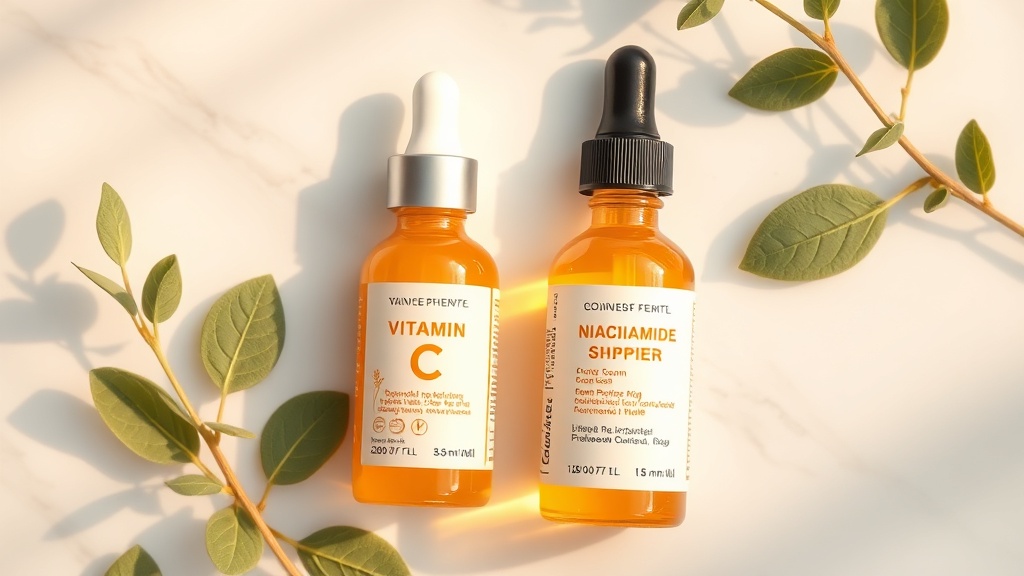
Can You Use Vitamin C and Niacinamide Together? (Yes.)

If skincare had an urban legend hall of fame, "never mix vitamin C and niacinamide" would be a first-ballot inductee.
I've seen this claim repeated on Reddit threads, TikTok videos, and even some beauty publications that should know better. The idea is that these two ingredients "cancel each other out" or create a problematic reaction on your skin.
Here's the truth: they work beautifully together. The myth is based on a misreading of decades-old chemistry, and modern formulation science has moved on. Let me explain.
Where the Myth Came From
The origin story traces back to research from the 1960s. Scientists observed that ascorbic acid (vitamin C) and niacinamide could react to form a complex called niacinamide ascorbate. They also noted that in very specific conditions — extremely high temperatures and very low pH — niacinamide could convert to niacin, which causes flushing and redness.
The key phrase there is extremely high temperatures. We're talking lab conditions that don't exist on human skin. Your face is not a beaker set to boiling.
At normal skin temperature (around 32°C) and the pH range of typical skincare products (pH 3–6), this reaction is negligible. A 2020 analysis in the Journal of Cosmetic Dermatology confirmed that niacinamide and ascorbic acid are stable together in properly formulated products.
Evidence level: Strong. This myth has been thoroughly debunked.
Why They Actually Complement Each Other
Here's what makes this pairing interesting from a formulation standpoint.
Vitamin C (L-ascorbic acid) is an antioxidant. It neutralizes free radicals from UV exposure and pollution, brightens hyperpigmentation by inhibiting tyrosinase, and supports collagen synthesis. It works best at a low pH (around 2.5–3.5).
Niacinamide (vitamin B3) is a barrier-repair ingredient. It strengthens the lipid barrier by boosting ceramide production, reduces inflammation, minimizes the appearance of pores, and helps regulate sebum production. It's effective across a wider pH range (5–7).
These two ingredients target different pathways. Vitamin C handles oxidative stress and pigmentation. Niacinamide handles barrier integrity and inflammation. Together, they address more concerns than either one alone.
Think of it like this: vitamin C is offense (fighting damage), niacinamide is defense (strengthening the barrier). A good skincare routine needs both.
How to Layer Them
The simplest approach: apply vitamin C first, then niacinamide.
Why This Order Works
Vitamin C (particularly L-ascorbic acid) needs a low pH to penetrate effectively. Applying it to clean skin first gives it the acidic environment it needs.
Niacinamide is pH-flexible and works fine applied after. It won't destabilize the vitamin C, and the slight pH difference between the two products is well within normal ranges.
Wait time? A minute or two is fine if you want to be cautious, but it's not strictly necessary. Your skin's pH buffering system handles the transition naturally.
Alternative Approach
If your skin is sensitive or you just prefer simplicity:
- Vitamin C in the morning (pairs well with SPF for enhanced photoprotection)
- Niacinamide in the evening (supports overnight barrier repair)
Both approaches work. Pick whichever fits your routine.
What the Research Shows
A 2005 study in the Journal of Cosmetic Dermatology found that combining 5% niacinamide with vitamin C derivatives showed superior brightening results compared to either ingredient alone. The combination reduced hyperpigmentation more effectively without increasing irritation.
Multiple dermatologists — including Dr. Shereene Idriss and Dr. Ranella Hirsch — have publicly stated that this combination is safe and beneficial for most skin types.
Evidence level: Strong. Both ingredients are well-studied individually, and their combination has been validated in clinical settings.
Who Benefits Most
This combination is particularly useful for:
- Hyperpigmentation concerns — vitamin C inhibits melanin production while niacinamide prevents melanin transfer to skin cells. Double mechanism.
- Aging concerns — vitamin C boosts collagen, niacinamide supports barrier function. Both reduce fine lines through different pathways.
- Post-inflammatory hyperpigmentation (PIH) — especially relevant for melanin-rich skin tones where PIH is more persistent. The combination addresses both the cause and the aftermath.
- Oily skin with dark spots — niacinamide regulates sebum while vitamin C tackles discoloration.
Potential Issues (Honest Assessment)
There are two legitimate concerns — neither of which is about the ingredients "canceling each other out."
1. Irritation from overloading actives. If you're using a high-concentration vitamin C (15–20% L-ascorbic acid) and your skin is already sensitized from retinoids or exfoliants, adding niacinamide on top could contribute to irritation — not because of a bad interaction, but because of cumulative active load. Solution: simplify the rest of your routine.
2. Product pilling. Some vitamin C and niacinamide formulas don't layer well texturally. You get those annoying little balls of product rolling off your face. This is a formulation issue, not a chemistry issue. Solution: let the first product absorb before applying the second, or switch to formulas with compatible textures.
Product Recommendations (28-Day Tested)
Budget (~$21 total)
CeraVe Skin Renewing Vitamin C Serum — ~$15
10% L-ascorbic acid in a stable, ceramide-infused formula. Gentle enough for most skin types. The airless pump packaging helps maintain potency.
The Ordinary Niacinamide 10% + Zinc 1% — ~$6
High concentration, minimal formula, excellent value. The zinc helps with oil control. Can pill under some moisturizers — let it absorb fully before layering.
Mid-Range (~$65 total)
Paula's Choice C15 Super Booster — ~$49
15% L-ascorbic acid with vitamin E and ferulic acid (the gold-standard antioxidant trio). Stable formula, elegant texture, plays well with other products.
Naturium Niacinamide Serum 12% Plus Zinc 2% — ~$16
Higher niacinamide concentration with zinc and hyaluronic acid. Good texture, layers well, no pilling issues.
Splurge (~$237 total)
SkinCeuticals C E Ferulic — ~$182
The benchmark vitamin C serum. 15% L-ascorbic acid, 1% vitamin E, 0.5% ferulic acid. Extensively studied, excellent stability for an L-ascorbic acid product. Is it worth the price? The research behind this specific combination is genuinely impressive. Whether that justifies the markup over Paula's Choice is debatable.
Paula's Choice 20% Niacinamide Treatment — ~$55
High-concentration niacinamide with ceramides, acetyl glucosamine, and licorice extract. The supporting cast of ingredients makes this more than just a niacinamide product.
The Bottom Line
Vitamin C and niacinamide don't cancel each other out. That claim is based on outdated chemistry conducted under conditions that don't exist on your face.
In reality, they complement each other — antioxidant protection meets barrier repair. Layer vitamin C first (it needs low pH), follow with niacinamide (pH-flexible), and move on with your life.
The skincare world has enough real concerns. This isn't one of them.
Medical disclaimer: I'm not a dermatologist. The information here is educational and not medical advice.
— Priya Chakraborty
Former pharmaceutical researcher explaining skincare science in plain English.