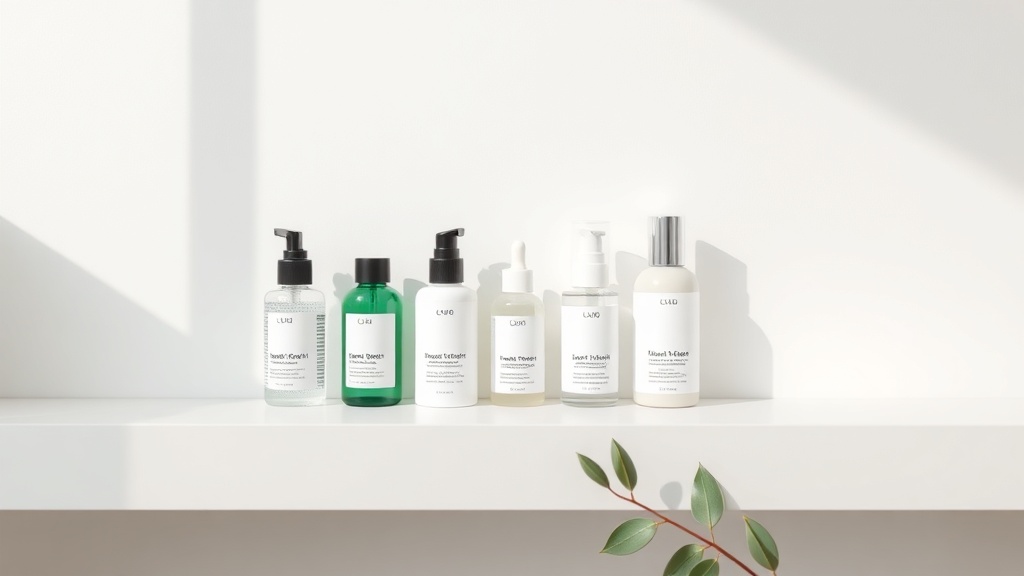
The 5-Product Routine: Why More Isn't Better

I worked in pharmaceutical formulation for years before writing about skincare. One of the first things you learn in pharma is the concept of diminishing returns — the point where adding more of something stops producing proportionally better results.
Skincare has a diminishing returns problem. And it kicks in a lot earlier than the beauty industry wants you to believe.
The practical ceiling for most people is five products. After that, you're adding complexity, cost, and irritation risk with minimal additional benefit.
Here's why, and here's what those five products should be.
The Problem With 10-Step Routines
The 10-step Korean skincare routine went viral around 2016 and fundamentally changed how Western consumers thought about skincare. Suddenly, more steps meant more dedication, which meant better skin.
Except it doesn't work that way.
More products means more ingredient interactions. Every product you layer introduces new ingredients that interact with the ingredients already on your skin. Some combinations are synergistic. Others are antagonistic. And many are simply redundant — you're applying the same active ingredient in three different products without realizing it.
More products means more potential irritants. Each formula contains not just active ingredients, but also preservatives, emulsifiers, fragrance compounds, and stabilizers. Every additional product increases your exposure to potential sensitizers. If you develop a reaction, figuring out which of your 10 products caused it becomes a detective game.
Product pilling. This is the most immediate practical problem. Layering too many products causes them to ball up on the skin's surface — those annoying little rolls of product that appear when you try to apply your fifth serum. This isn't just cosmetically annoying; it means the products aren't absorbing properly.
Diminishing returns on actives. Your skin has a finite capacity to absorb and respond to active ingredients. Two serums targeting hyperpigmentation don't work twice as well as one — they compete for the same receptors and pathways. After a certain point, you're just putting money on your face.
The Five Products You Actually Need
1. Cleanser (PM, optional AM)
Removes dirt, oil, sunscreen, and environmental debris. Choose based on your skin type:
- Dry/sensitive: cream or milk cleanser
- Oily/combination: gentle gel or foaming cleanser
- Normal: whatever feels comfortable
One cleanser. Not a three-step cleansing ritual.
2. Active Treatment (PM)
This is your workhorse — the product that targets your specific skin concern. Pick ONE primary active:
- Anti-aging: retinoid (retinol, retinal, or tretinoin)
- Brightening: vitamin C (L-ascorbic acid, 10–20%)
- Acne: benzoyl peroxide, salicylic acid, or adapalene
- Texture: AHA (glycolic, lactic, or mandelic acid)
You don't need all of them simultaneously. Pick your primary concern, choose the best active for it, and commit for 12 weeks before evaluating.
3. Moisturizer (AM and PM)
Replenishes the skin barrier, reduces water loss, and keeps skin comfortable. Look for ceramides, glycerin, hyaluronic acid, or squalane. The texture should match your skin type and climate.
This is the product that supports everything else. Without adequate moisture, actives cause more irritation and your barrier breaks down faster.
4. SPF (AM only)
Non-negotiable. SPF 30 minimum, broad-spectrum. This is the single most effective anti-aging product in existence, and it's not close.
Without SPF, your retinoid and vitamin C are fighting a losing battle. UV damage outpaces repair if you're not protecting.
5. One Targeted Treatment (PM)
This is your flex spot — one additional product that addresses a secondary concern:
- Hydration: hyaluronic acid serum (for dehydrated skin)
- Barrier repair: niacinamide serum (for sensitized skin)
- Dark spots: azelaic acid or alpha arbutin (for hyperpigmentation)
- Oil control: niacinamide + zinc (for oily skin)
- Fine lines (supplement): peptide serum (if you're already using a retinoid)
One product. Not three.
Why This Works
This five-product routine covers every fundamental skincare need:
- Clean skin (cleanser)
- Active improvement (treatment)
- Barrier protection (moisturizer)
- UV defense (SPF)
- Secondary support (targeted treatment)
Everything beyond this is incremental at best and counterproductive at worst.
Budget Examples
Budget 5-Product Routine (~$55)
- CeraVe Hydrating Cleanser — $16
- The Ordinary Retinol 0.5% in Squalane — $7
- CeraVe Moisturizing Cream — $17
- Neutrogena Hydro Boost SPF 50 — $12
- The Ordinary Niacinamide 10% + Zinc — $6
Total: ~$58. This is a genuinely excellent routine. Every product here is well-formulated, evidence-backed, and widely available. You don't need to spend more than this for effective skincare.
Mid-Range 5-Product Routine (~$150)
- La Roche-Posay Toleriane Cleanser — $17
- Paula's Choice Clinical 1% Retinol — $65
- First Aid Beauty Ultra Repair Cream — $38
- Supergoop Unseen Sunscreen — $38
- Paula's Choice Niacinamide Booster — $44
Total: ~$202. Better textures, more elegant formulations, some additional supporting ingredients. Genuinely nicer to use than the budget routine, but not dramatically more effective.
Splurge 5-Product Routine (~$350)
- Drunk Elephant Beste Jelly Cleanser — $34
- SkinCeuticals Retinol 0.5 — $88
- Dr. Jart+ Ceramidin Cream — $48
- SkinCeuticals C E Ferulic — $182
- Drunk Elephant Protini Polypeptide Cream — $68
Total: ~$420. Luxurious products with excellent formulations. The SkinCeuticals C E Ferulic is the one product here where the research genuinely justifies a premium. The rest are paying for brand and experience.
When to Add a Sixth (or Seventh) Product
I'm not saying five is an absolute ceiling. There are legitimate reasons to temporarily add products:
- Prescription treatments (tretinoin, azelaic acid) that don't replace your existing active
- Seasonal adjustments (a heavier occlusive in winter, a lighter moisturizer in summer)
- Short-term treatment phases (a chemical exfoliant used 1–2x/week)
The key word is "intentionally." Every product in your routine should have a clear purpose that isn't already served by another product. If you can't explain what each product does and why you need it alongside the others, simplify.
The Bottom Line
The beauty industry has a financial incentive to sell you more products. That's not cynicism — it's business.
Your skin has a finite capacity to absorb and respond to ingredients. Five well-chosen products cover every fundamental need. Everything beyond that is diminishing returns.
Buy fewer products. Buy better products. Be consistent.
That's the routine that works.
Medical disclaimer: I'm not a dermatologist. The information here is educational and not medical advice.
— Priya Chakraborty
Former pharmaceutical researcher explaining skincare science in plain English.