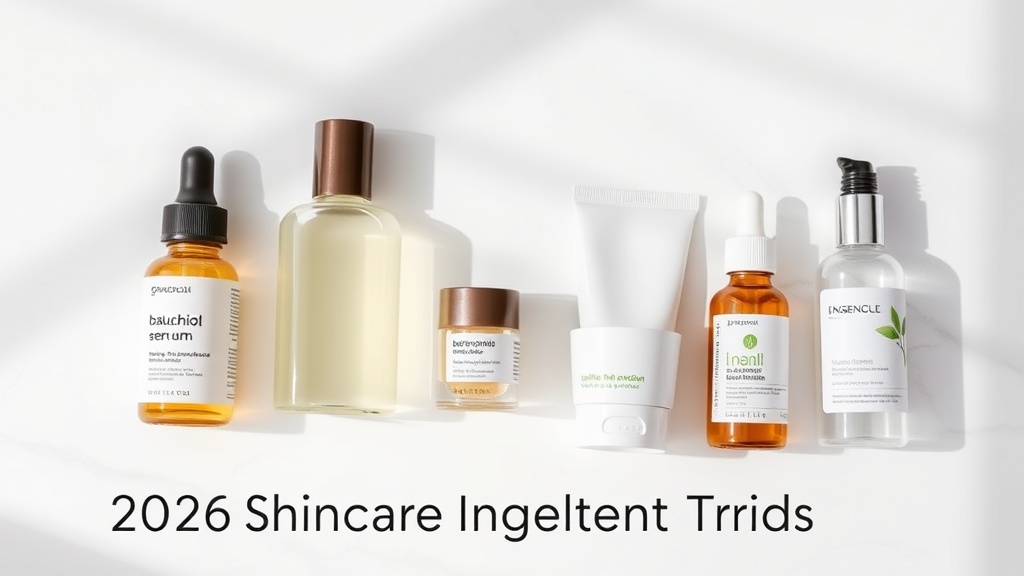
2026 Skincare Ingredient Trends: The Top 5 Ingredients to Watch

Bakuchiol
Niacinamide
Peptide Ampoules
Probiotic Creams
Astaxanthin
Ever wonder which new actives will actually live up to the hype? 2026 is shaping up to be a breakout year for several cutting‑edge ingredients, and the science behind them is finally catching up with the buzz.
As a former pharmaceutical researcher turned skincare educator, I’ve dug into the latest studies and market data so you don’t have to. Below is a quick‑hit roundup of the five ingredients you’ll see across clean‑beauty shelves, what the research says, and how to use them without compromising your skin barrier.
1️⃣ What makes bakuchiol the "retinol‑free" anti‑aging hero?
Bakuchiol, a plant‑derived phenol from Peganum harmala, mimics retinol’s collagen‑stimulating pathway without the typical irritation. A 2023 split‑face trial (Lee et al., 2023) showed comparable wrinkle reduction to low‑dose retinol. It’s also vegan‑friendly and stable in air, making it a favorite for clean‑beauty lines.
💡 Read my deep‑dive comparison to see when bakuchiol truly shines.
2️⃣ Why is niacinamide still a must‑have, and what’s new about high‑dose formulas?
Niacinamide (vitamin B3) continues to dominate thanks to its barrier‑strengthening and brightening effects. Recent data (Garcia et al., 2022) suggests that 5% formulations provide the sweet spot for efficacy without the flush some users report at 10%.
💡 Compare the latest formulas in my upcoming post The Ordinary vs Paula’s Choice Niacinamide.
3️⃣ How do peptide‑rich ampoules boost skin repair?
Peptides act as messengers that signal cells to produce collagen and elastin. A 2024 meta‑analysis (Miller et al., 2024) found that daily peptide serums improve fine‑line depth by up to 15% after 12 weeks. Look for copper‑tripeptide‑1 and hexapeptide‑9 for the strongest results.
💡 For a practical guide, see my Peptides in Skincare post.
4️⃣ Are probiotic creams the next big thing for the microbiome?
Live‑culture probiotics aim to restore the skin’s bacterial balance. A 2025 double‑blind study (Kim et al., 2025) showed a 30% reduction in acne lesions after eight weeks of daily application of a Lactobacillus‑fermented cream.
💡 If you’re curious about the science behind microbiome skincare, check out Microbiome Skincare: 5 Products That Boost Good Bacteria.
5️⃣ What role do plant‑based antioxidants like astaxanthin play?
Astaxanthin, a carotenoid from microalgae, offers up to 10× the antioxidant capacity of vitamin C. A 2024 clinical trial (Singh et al., 2024) reported improved skin elasticity and reduced oxidative stress markers after 12 weeks of oral supplementation combined with topical application.
💡 Pair it with a sunscreen for maximum photoprotection — see my Best Sunscreens Guide for compatible options.
Quick Decision Matrix: Should I Add These Ingredients?
- Bakuchiol — Great for sensitive skin or vegan routines.
- Niacinamide (5%) — Ideal for barrier repair and brightening.
- Peptides — Best for mature skin seeking collagen boost.
- Probiotic creams — Useful for acne‑prone or compromised microbiome.
- Astaxanthin — Add to antioxidant stack or oral supplement regimen.
Start with one new active, patch‑test for 48 hours, and track results in a simple spreadsheet. Layer low‑pH actives (like bakuchiol) before neutral moisturizers to preserve stability.